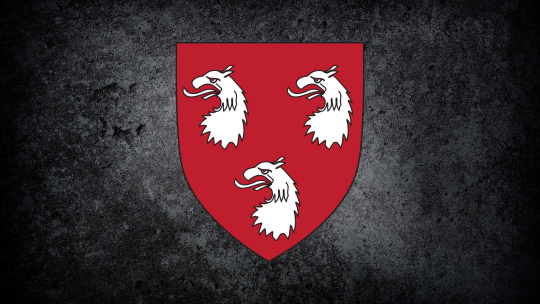
The name Ryan is an ancient Irish surname rooted in early Gaelic history. Its origins lie in Old Irish personal names whose original meanings were already obscured before written records began. Closely associated with Munster, particularly Tipperary and Limerick, Ryan reflects a lineage shaped by devotion, territory and centuries of linguistic evolution rather than simple modern interpretations.
Ryan is an Irish surname derived from the Old Irish personal name Rían or Ríain. Modern popular sources often claim that the name means “little king” or “illustrious”, yet these interpretations are not supported by historical linguistics. In reality, the original meaning of Rían appears to have been lost at an early stage, predating reliable written records, and therefore remains uncertain.
The surname Ryan is most commonly associated with the province of Munster, particularly the counties of Tipperary and Limerick. In this context, it represents an anglicised form of the Old Gaelic Ó Maoilriain, meaning “descendant of Maoilriain”. The personal name Maoilriain consists of two elements, the first of which, maol, has more than one possible interpretation. It may derive from an early Irish term related to leadership or heroism, cognate with the Welsh mail, meaning “hero”. More commonly, however, maol is understood to mean “bald” or “tonsured”, a term frequently used in early Gaelic names to denote a devotee or follower, often with religious or cultic associations.
The second element, rian, is extremely ancient and linguistically obscure. Its precise meaning is unknown, though some scholars suggest a possible connection to an Old Irish word associated with water. If this interpretation is accepted, the name Maoilriain may be understood in a transferred sense as “devotee of Rian”, potentially referring to an early water-related deity or cult figure. Such interpretations remain speculative and cannot be stated with certainty.
The Ó Maoilriain sept was historically located in the territory of Owney, formerly known as Owney O’Mulryan, an area that today forms two baronies along the border between Counties Limerick and Tipperary. Over time, the surname evolved into various forms, including Mulryan and Ryan. In modern Irish, Ryan is commonly rendered as Ó Riain; however, this spelling more accurately corresponds to a distinct Leinster sept descended from Lathaoir Mór, a second-century King of Leinster, whose descendants ruled the territory of Uí Dróna in what is now County Carlow.
The earliest recorded spelling of the surname appears as Ó Maoilriain in medieval documents dating from the fourteenth century, including records from County Tipperary compiled during the reign of Gerald, Earl of Desmond, between 1369 and 1374. As administrative systems expanded and personal taxation became more common, surnames grew increasingly fixed, though their spellings continued to evolve over the centuries, often producing a wide range of variants.
Although the surname Ryan is sometimes linked to the Old Irish word rí, meaning “king”, this connection is generally rejected by scholars. The popular interpretations of Ryan as “little king” or “illustrious” are therefore best regarded as later folk etymologies rather than historically grounded meanings.